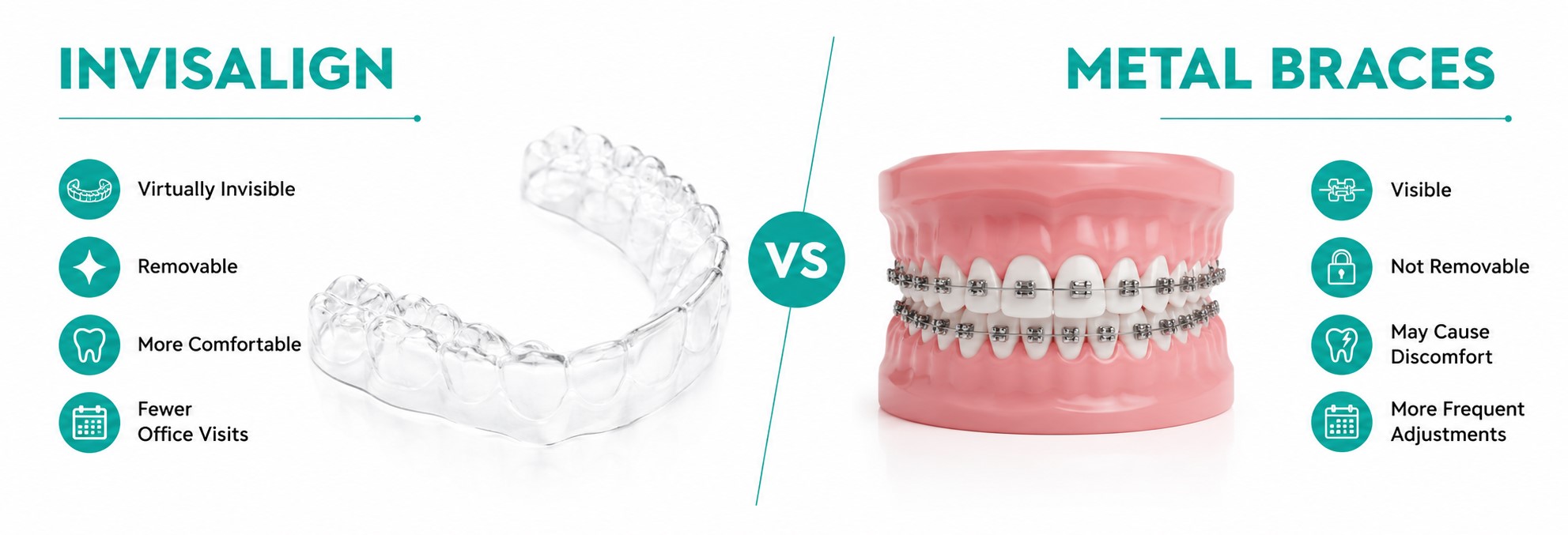
Choosing the correct orthodontic treatment is a significant clinical and financial decision. At Oliver’s Battery Dental Surgery, we frequently consult with patients debating between modern clear aligner therapy and traditional fixed appliances. If you are searching for an experienced Olivers Battery invisalign dentist or evaluating invisalign in Winchester, this comprehensive guide will dissect the clinical data, biomechanics, and lifestyle factors to help you decide.
Here is our final clinical comparison addressing the ultimate question: invisalign vs braces, which is right for you?
Invisalign and Metal Braces, The Difference
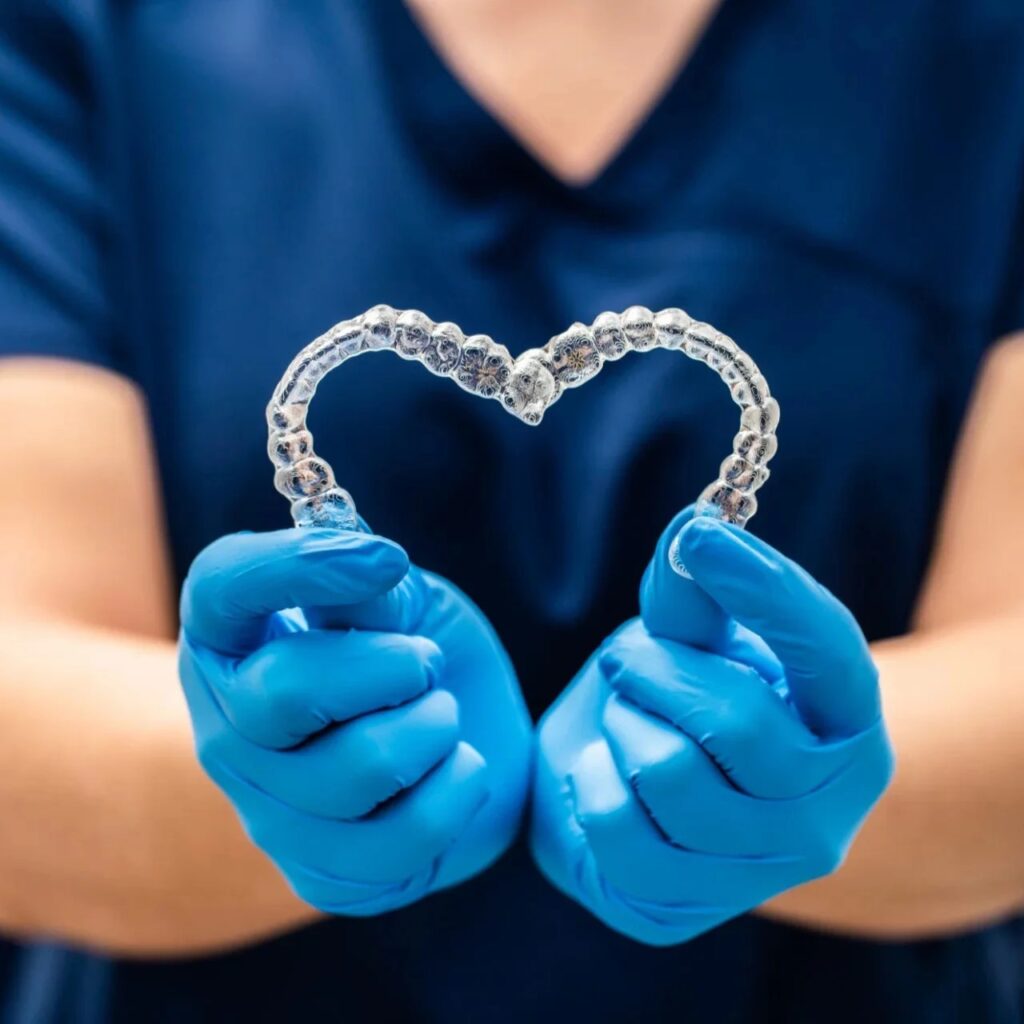
Invisalign Clear Aligners: Invisalign utilizes a series of removable, custom-fabricated polyurethane plastic trays (SmartTrack® material). Each tray is engineered via 3D CAD/CAM technology to apply precise, controlled forces to specific teeth at specific times.
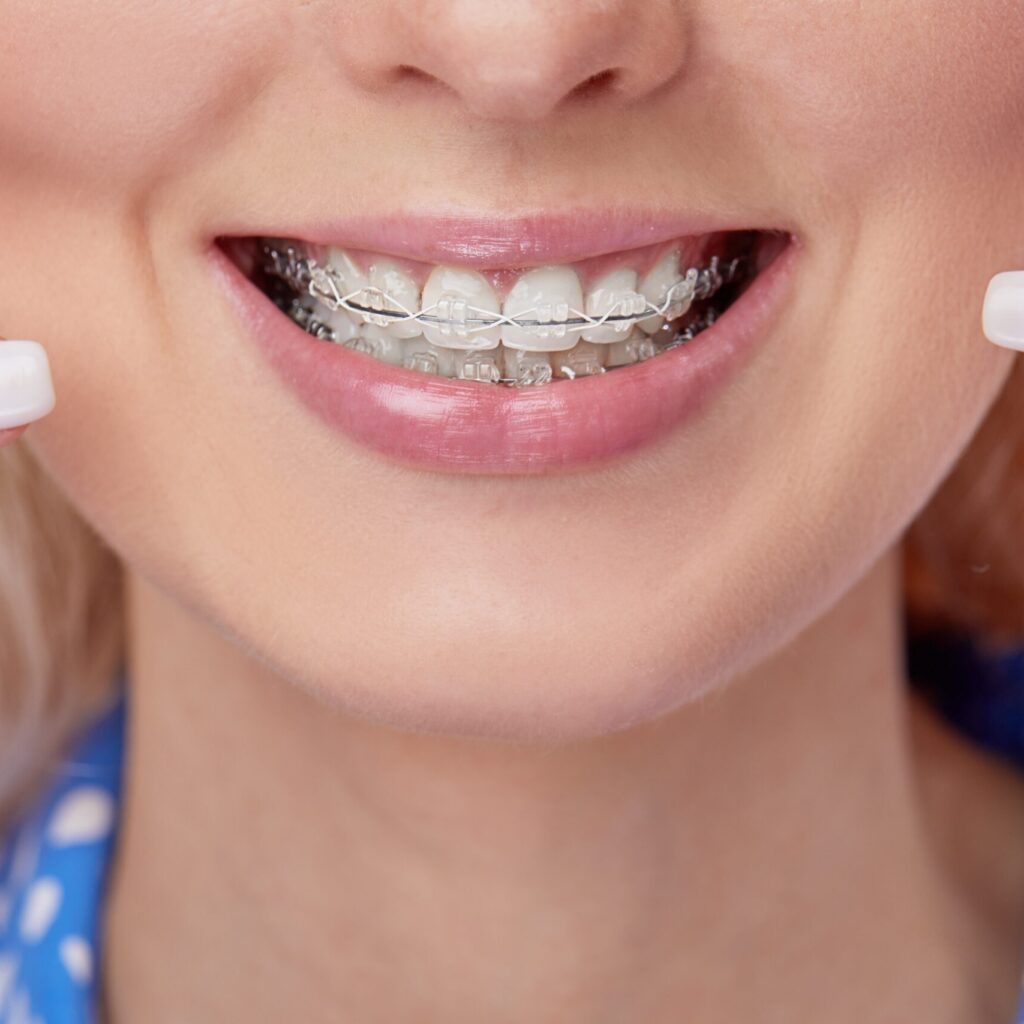
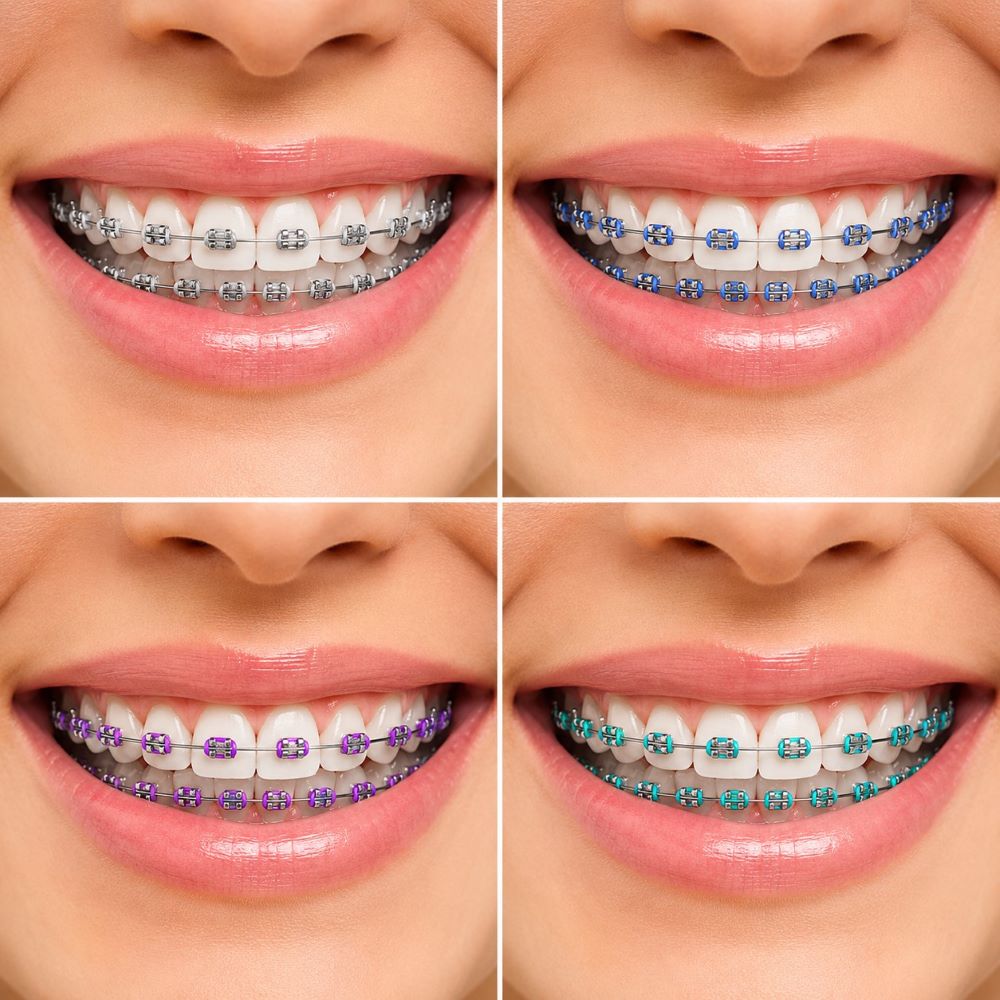
Traditional Metal Braces: This system utilizes stainless steel brackets bonded to the enamel of each tooth, connected by a rigid archwire. The wire exerts continuous pressure, and adjustments are made periodically by your dentist to dictate tooth movement.
When comparing clear aligners vs braces, the primary distinction is the delivery of force: brackets pull and push simultaneously via wire tension, while aligners push teeth sequentially into pre-calculated positions
Tnvisalign vs Braces, Which is Cost Effective?
One of the most common questions at our Winchester invisalign practice is regarding invisalign vs braces costs. Historically, clear aligners were significantly more expensive than fixed braces. Today, advancements in digital dentistry have leveled the playing field.
Metal Braces Costs
Generally cost-effective for highly complex, multi-year skeletal corrections. However, frequent emergency visits for broken brackets or wires can add indirect costs (time off work, travel).
Invisalign Aligners Costs
The invisible aligners vs metal braces price gap has closed. invisalign costs in Winchester at our clinic are highly competitive, often mirroring the cost of ceramic or high-end traditional braces.
At Oliver’s Battery Dental Surgery, we maximize cost-effectiveness through our all-inclusive pricing model, which includes a Free invisalign consultation and Free invisalign retainers at the end of your treatment.
Invisalign vs Braces Treatment Time
When analyzing the invisalign vs braces timeline, clinical studies indicate that clear aligners can often achieve results faster in mild to moderate cases due to the precise, simultaneous movement of multiple teeth.
Traditional Braces Treatment Duration
On average, treatments take 12 to 18 months. For minor aesthetic corrections, invisalign express in Olivers Battery can yield results in as little as 3 to 6 months.
The speed of Invisalign is entirely dependent on patient compliance (wearing the trays for 20 to 22 hours daily).

Invisalign Braces Treatment Duration
The invisalign vs braces treatment time comparison shows traditional braces generally average 18 to 24 months, often required for complex skeletal malocclusions.
traditional braces are generally faster for complex, severe malocclusions (like severe rotations or significant vertical discrepancies). Furthermore, the speed of invisalign relies on patient compliance.
Note***: The speed of Invisalign is entirely dependent on patient compliance (wearing the trays for 20 to 22 hours daily).
Comparing the Results and Effectiveness
Is invisalign better than metal braces? The answer depends entirely on the clinical presentation of the patient’s malocclusion. Let’s explore the invisalign vs braces effectiveness across different dental situations:
1. invisalign vs braces for crowded teeth
Both systems handle crowding exceptionally well. Invisalign is particularly effective at expanding the dental arch and utilizing interproximal reduction (IPR) to resolve crowding predictably.
2. invisalign or braces for gaps
For generalized spacing (diastemas), clear aligners provide excellent bodily control to close spaces without tipping the teeth. Both methods yield highly stable
3. invisalign or braces for overbite and underbite
- Overbite: Invisalign effectively treats mild to moderate overbites using mandibular advancement wings or precision cuts for elastics. Severe skeletal overbites may require fixed braces or orthognathic surgery.
- Underbite: Traditional braces combined with surgical intervention are often the gold standard for severe underbites, though clear aligners can mask mild cases through dental compensation.
4. invisalign or braces for crossbite and open bite
- Crossbite: Clear aligners are highly efficient at expanding the arch to correct single-tooth or mild posterior crossbites.
- Open Bite: Recent clinical reports show invisalign clear aligners and metal braces are both effective here, but Invisalign often provides superior vertical control for anterior open bites by intruding posterior teeth.
Issue
Crowded
Gaps
Overbite
Crossbite
Metal Braces
Invisalign
do metal braces last more than invisalign aligners?
Patients often ask, “is invisalign lasting more than braces in the long term?”
invisalign vs braces for teens, kids and adults
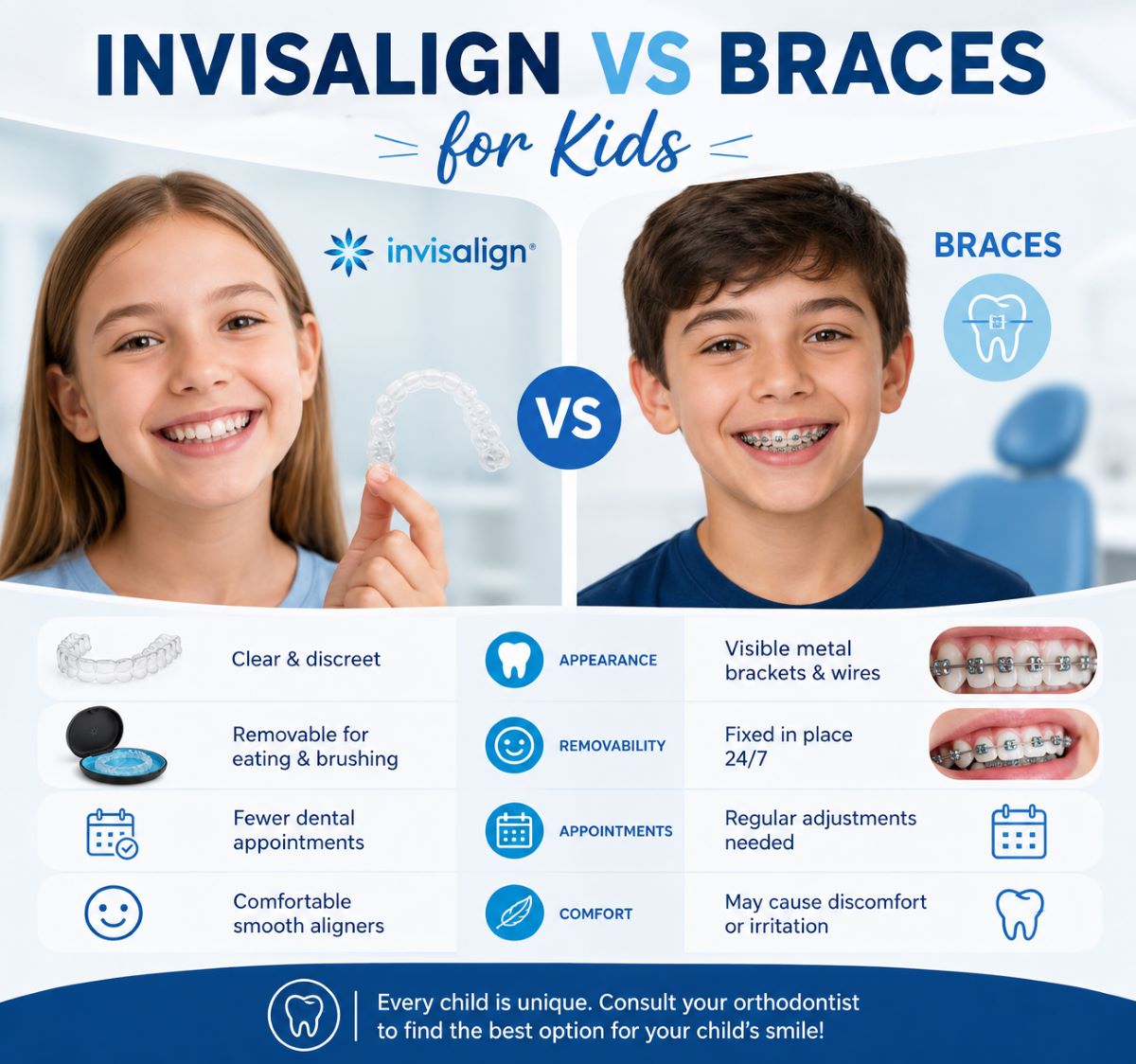
invisalign vs braces for kids (Phase 1 Orthodontics)
For young children (ages 7-10) needing early interceptive treatment, Invisalign First provides an alternative to traditional expanders and partial braces.
However, traditional fixed appliances remain the standard for complex pediatric arch development.
invisalign or braces for teens
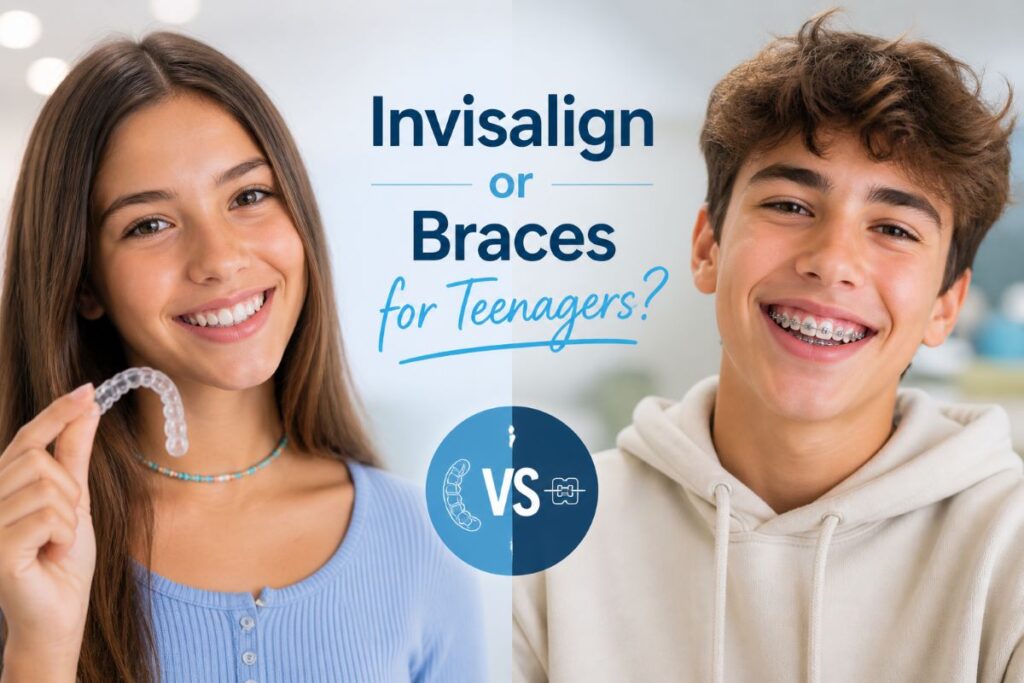
Teenagers benefit massively from clear aligners due to aesthetics and oral hygiene. Invisalign Teen features compliance indicators to ensure the aligners are worn adequately. However, for non-compliant teens, fixed metal braces remove the responsibility of remembering to wear the device.
Adult Orthodontics
For adults, Invisalign is the overwhelming favorite. The discreet nature of clear aligners fits seamlessly into professional lifestyles, making us a leading invisalign provider in Winchester for adult smile restorations.
is invisalign less harmful than normal braces?
From a periodontal and enamel preservation standpoint, clinical evidence heavily favors clear aligners.
- Decalcification: Metal braces trap plaque against the enamel, significantly increasing the risk of “white spot lesions” (decalcification) and tooth decay. Because Invisalign is removable, patients can brush and floss normally.
- Root Resorption: The lighter, controlled forces of Invisalign mathematically reduce the risk of apical root resorption (shortening of the tooth roots) compared to the heavy continuous forces of metal wires.
- Soft Tissue Trauma: Metal brackets frequently cause ulcers and lacerations on the cheeks and lips. Smooth polyurethane aligners eliminate this risk entirely.
the overall comparison table
To summarize this clinical guide, review our quick-reference table below:
| Feature/Metric | Invisalign Clear Aligners | Traditional Metal Braces |
|---|---|---|
| Aesthetics | Excellent (Virtually invisible) | Poor (Highly noticeable) |
| Removability | Yes (Must wear 22 hours/day) | No (Fixed to teeth) |
| Dietary Restrictions | None | High (Avoid hard/sticky foods) |
| Oral Hygiene | Standard brushing & flossing | Requires specialized tools |
| Comfort | High (Smooth plastic, lighter forces) | Moderate (Risk of ulcers/abrasions) |
| Average Treatment Time | 6 to 18 Months | 18 to 24 Months |
| Severe Malocclusions | Moderate Effectiveness | Highly Effective |
| Follow-up Appointments | Every 6-8 weeks | Every 4-6 weeks |
Take the Next Step with an Invisalign Winchester Dentist
Choosing between invisalign vs metal braces requires a personalized clinical assessment. As a trusted Winchester invisalign practice, Oliver’s Battery Dental Surgery uses state-of-the-art 3D scanning to preview your future smile before you even begin.
Ready to make your decision? Contact us today to secure your Free invisalign consultation and let our clinical team guide you toward the perfect orthodontic solution.